

News & Insights
Latest news and legal insights from HANBYOL LAW LLC.
"Stare decisis - Structural absurdity, potential for court error"
2011-03-04 07:38
■ 방송 : FM 98.1 (18:00~20:00)■ 방송일 : 2011년 3월 3일 (목) 오후 7시■ 진행 : 정관용 (한림국제대학원대학교 교수)■ 출연 : 김용원 변호사
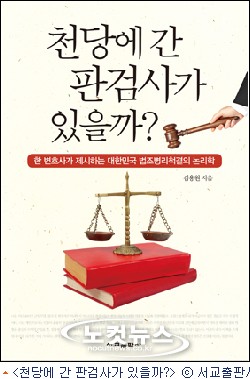
▶정관용> 시사자키 2부입니다. In today's part 2, we're joined by Attorney Kim Yong-won, who wrote the book, <Is There a Judge in Heaven?>, which sharply exposes the irregularities in Korea's legal system and the problems of the prosecution organization that follows power. The actual A prosecutor, but <Is there a prosecutor who has gone to heaven?' He's the author of a provocatively titled book, <Is There a Judge in Heaven? <i> We'll be joined by attorney Kim Yong-won. Welcome.
▷Kim Yong-won> Yes, it's good to see you.
▶Jung Kwan-yong> You were a prosecutor from '83 to '92, right? It's been about 19 years.
▶Jung Kwan-yong> There's no story that the title of <Will there be a judge who went to heaven> put a question mark on it, right? So?
▶▶Kwan-yong Jung> Is there no one?
▷Kim Yong-won> I wonder if there is no one who has gone to heaven. So for someone who has been a judge for a year or two and then quit, it's not necessarily true.
▶Jung Kwan-yong> Can't you go to heaven if you've been a judge for nine years or so?
▷Kim Yong-won> I'm thinking that it's probably a little difficult to go to heaven. (Laughs)
▶Jung Kwan-yong> And if you put a title like this, people will ask, "Do lawyers go to heaven, or do people who are just lawyers without being judges go to heaven?"
▷Kim Yong-won> I wrote it in my book. Not to mention lawyers. Of course, they can't go to heaven, I think so.
▶Kwan Yong Jung> Then, no one in the legal profession can go to heaven?
▷Kim Yong-won> The lawyer is a profession that has to have a dispute between people to have a job.
▶Jung Kwan-yong> Are you a person who picks fights?
▷Kim Yong-won> You have to find various ways to provoke a dispute and to win the dispute, but when you find those ways, you pursue unjust methods, unjust methods. In any case, in reality, this causes disputes between people and I think it's a bit much to expect to go to heaven when you're in a job that's supposed to be empowering.
▶Tolerance> Really? Still, when there is a dispute, they help you avoid being unfairly harmed in a fair way. Isn't such a lawyer really good?"
▷Kim Yong-won> If you can do it thoroughly, such a lawyer can be said to be a good lawyer, but I think such a lawyer is really rare in our society.
▶Jung Kwan-yong> Enough about lawyers, let's go to the judge. Is it harder for a judge to go to heaven, the longer you do it? Why?"
▷Kim Yong-won> It can be said that it is a common problem for both judges and prosecutors, but our society is a society where misjudgment occurs very frequently. Whether it's an intentional mistake or an accidental mistake, I've seen it constantly as a lawyer, and it causes infinite suffering to the party who is wronged. If a judge or a prosecutor makes the right judgment and makes the right decision, it's a given. You can't even say it's a good thing, because it's a no-brainer. But when it's a bad thing, it causes untold suffering to the party that's wronged, and that's why you end up doing a lot more bad things than good things when you're in the profession for a long time.
▶When you say a mistrial, you're saying it's a wrong decision, right? But isn't that the lawyer's point of view? They made the judgment because they thought it was the right judgment?"
▷Kim Yong-won> Even now, many cases that have happened in the past in Korea are being retried, and through retrials, acquittals are being made and past judgments are being overturned.
▶▶Jung Kwan-yong> Recently, what is the civil service and everything is like that, right? So prosecutors can never be free from this problem of miscarriages of justice.
▶Jung Kwan-yong> Isn't the judge responsible for the miscarriage of justice? Is the prosecutor also responsible?
▶Kwan-yong Jeong: The prosecutor is also responsible because he made a wrong indictment?
▶▶Kwan-yong Jeong> That's a long time ago, and if you count it as a recent one?
▷Kim Yong-won> But there is no such institution that can clearly determine that this is a misjudgment with a recent one. Judicially, after the Supreme Court's decision, even if it is not the truth, it becomes the judicial truth.
▶▶Kwan-yong Jeong> Because it is confirmed?
▶Kwan-yong Jeong: There are many things that are clearly not true in your judgment? I heard one case in the book, the Samsung Engineering case, as a specific example, and there are some obvious misjudgments related to the contents, but they were not corrected and went over.
▶Kwan Yong Jung> Is it too long to introduce an overview of the case?
▷Kim Yong-won> Yes, it's a little complicated and long to introduce the case in detail, and it doesn't make sense, but In a nutshell, it goes like this. It's a case where a subcontractor does a job, and there's something called the completion date, and if the completion date is earlier, Samsung is liable for more money, and if it's a few months later, as Samsung claims, Samsung is liable for less money, but the completion date is not something that one or two people know, it's something that dozens of people involved know, and the courts have made very different findings of fact about that.
▶▶Jung Kwan-yong> Have you had such a case?
▷Kim Yong-won> There are specific cases like that, but there are also cases where the lower courts have recognized differently in subsequent cases related to that.
▶Jung Kwan-yong> Did you handle that case yourself?
▶Jung Kwan-yong> Then, what you are claiming to be a mistake is actually disputable, isn't it?
▷Kim Yong-won> So there is always a very strong question whether the conclusion reached through the judicial process is necessarily a justified conclusion.
▶Kwan-yong Jeong> Yes, I understand, so you said that the reason why you can't go to heaven without being prosecuted is because of the countless wrong judgments.
▷Kim Yong-won>Misjudgment is the main reason, but the next important factor is that judges in Korea pursue power and wealth at the same time, and their obsession with power and wealth is so great that it is beyond common sense. So, if you look at it a little differently, you can say that there are no people who are as corrupt as the prosecutors.
▶Kwan-yong Jeong> Is that right?
▷Kim Yong-won> The reason is that prosecutors exercise tremendous power when they are in public office, and I don't have to explain it in detail. And when they open a law firm after being a prosecutor for a long time, they make a lot of money in a short period of time.
▶Kwan-yong Jeong> Is that the so-called transfer fee?
▷Kim Yong-won> Yes, that>s right, there>s an absurdity called ex-gratia, and the absurdity of this ex-gratia is that the current judge and the former judge are actually tacitly cooperating.
▶Jung Kwan-yong> That>s right, because the incumbents are thinking, I>m going to be there someday. That's what it's like, isn't it?"
▷Kim Yong-won> So the other day, Mr. Kim Young-ran, who retired as a Supreme Court justice and is now the chairman of the Rights and Interests Committee, told me that he could have earned about 10 billion won a year when he opened his own practice, but he didn't. So I said to him, 'Why don't you open a law firm I was told that I could get about 10 billion if I did this. This can't happen in a normal country. What kind of public official, the professors' association or any other public official, can be in public office for a long time and still have all the power.
▶Jung Kwan-yong> Yes, all the power.
▷Kim Yong-won> Yes, all the power, and then open a law firm and make a lot of money. This is something that must be overcome, and there is no way to overcome it.
▶Jung Kwan-yong> How can we do it? Supreme Court is the highest honor, and then prosecutors, everybody wants to be a prosecutor general. When you appoint a Supreme Court justice, when you appoint a prosecutor general, when you appoint a constitutional court justice, you appoint somebody who submits a pledge that he or she will not practice law in the future. Those people, when they leave office, they can go to law school or go to a school and teach young people, and they get paid a lot of money. Professors get paid enough to live, don't you think, so what a great way to do it, good for the young people, good for your own honor.
▶▶Jung Kwan-yong> But what about those who only do it for the prosecutor general, the Supreme Court justices, and the Constitutional Court justices, and then they go up to the deputy chief judge of the high court?
▷Kim Yong-won: It's a narrow gate, and for prosecutors, it's very selective to become a prosecutor from a deputy prosecutor or a deputy prosecutor or a chief prosecutor, and for those people, it's not that they can't practice law until the end of their career, but for a period of three years, for example.
▷Kim Yong-won> Yes, they have a set period of time, and they take a pledge that they will not open a lawyer like this.
▶Jung Kwan-yong> That's actually something that has been discussed in the National Assembly for a long time.
▷Kim Yong-won> There is no need for legislative discussion. But it's not going to be done that way, it's going to take legislation to do that, and it's going to be a matter of promoting or appointing people who voluntarily pledge not to practice law or not to practice law for three or five years.
▷Kim Yong-won> It's something that they can do right now, I think.
▷Kim Yong-won> But will they do it?
▷Kim Yong-won> If the people demand it, if the people demand it strongly, why is it that there is now a talk that a Supreme Court justice can get 10 billion for a year after leaving office, and then what kind of people are judging who, prosecutors? I see it as a corruption.
▶Jung Kwan-yong> Yes, I understand. That is now the so-called ex-officio honor controversy after leaving office, and there is also corruption while in office, such as sponsored prosecutors, do court judges also have sponsors? However, compared to sponsored prosecutors, sponsored judges may be fewer in number or less severe, but that's why I called them sponsored judges in the book, not sponsored prosecutors. The reason for the creation of sponsored judges can be said to be in the same vein as the pursuit of power and wealth at the same time, as I mentioned earlier, and it is the pursuit of desire without restraint. If you are a public official or a judge, you can eat lunch for five thousand won, and if you have a good dinner, you can eat ten thousand won, twenty thousand won, but ah, that good food, expensive food, expensive food in restaurants these days, isn't there a lot of things that cost more than one hundred thousand won per person? I want to eat expensive food, and I can't be satisfied with eating soju, and I want to drink yangju, and I want to go to a bar where there are just hostesses, and I pursue my desires unrestrainedly like this.
▶Jung Kwan-yong> So I needed a sponsor?
▷Kim Yong-won> You need a sponsor.
▶Jung Kwan-yong> You said that the sponsors are mainly lawyers? But what you need to pay attention to is what kind of businessmen are the sponsors. People who have a normal business don't go to the prosecutors and give them drinks, go to a room-salon, and entertain them.
▶Jung Kwan-yong> There's no reason to look good, right? And even if you don't commit a crime, if someone around you sees such a person, they will ask for a favor and take the money. Recently, OO E&C President Jung was punished for that and is now serving a sentence. That's an example.
▶Kwan-yong Jeong> So, just like the saying that there is no free lunch, people who become sponsors, and if a lawyer says that they are acting as a sponsor, isn't that to help them make an unreasonable judgment in a case?
▶Jung Kwan-yong> And isn't it that it works?
▷Kim Yong-won> The problem with our current legal society is that lawyers who have been in practice for less than a year, or a year or so after leaving practice, can make a lot of money because of the phenomenon of ex-gratia, but there are many lawyers who are not in the line of ex-gratia. For people who come out of law school and start practicing law without any experience as a prosecutor, the way they get in touch with prosecutors is through personal connections.
▶▶Kwan-yong Jeong> Through academic association or something like that?
▷Yongwon Kim> Through academic association, delay, they approach the prosecutor and entertain them and make connections that way. So, it can be said that such lawyers often become sponsors.
▶Kwan-yong Jeong> So, even while in office, they are stained with corruption through the system of sponsors, and after that, they get rich through the honor of transfer, and that structure is not a story of a day or two, is it?I think there are.
▷Kim Yong-won> I think there are.
▶Jung Kwan-yong> They can still go to heaven.
▷Kim Yong-won> I told you earlier, those people are not free from misjudgment.
▶Jung Kwan-yong> Yes, I understand.
▷Kim Yong-won> But the reason why there are so many misjudgments in Korea is the culture of false testimony, the culture of lying. If you look at some statistical data, there are some data that show that people in any country lie to a certain extent, and the percentage of people who are convicted of committing a crime confess to their crimes during the investigation and trial process, the percentage is very low in countries such as Korea and the United States. On the other hand, there are other countries where the percentage is very high. The percentage is very low, and the low percentage of confession means that they are good at lying. And it's not just the defendants who lie, it seems like a lot of the witnesses who come to court are in a lying contest, because they're supposed to testify to what they saw, what they felt, what they experienced, and they come to testify and they ask the parties, how is it in your favor to testify, and then they lie, and so unless the prosecutors are gods, unless they've had special training in the ability to identify lies, they're bound to get it wrong. And in our country, the risk of misjudgment is much greater, and this intentional misjudgment is coupled with the problem of misjudgment, which is coupled with the problem of ex parte honors.
▶Jung Kwan-yong> You can say, "You made a good point without much debate as far as the honorarium part and the fact that judges have sponsors even while in office, and you pointed out these corruption issues and these things sharply, but you keep bringing up the issue of misjudgment, and I can't say that there is no such reality, but our society is a democracy and a country with the rule of law, The rule of law is supposed to be based on the realization of justice through the judiciary, and the publication of a book like this and claims like yours could bring distrust in the entire judicial system to all of our citizens and shake the very foundation of the rule of law, and do you have any concerns or thoughts or worries about that?
▷Kim Yong-won>You are right to be concerned about that, but in reality, Korea is almost uncritical of the behavior of prosecutors.
▶Jung Kwan-yong>No, but there is a lot of criticism these days.
▷Kim Yong-won>They should be supervised and monitored. This is why there are so many cases where the first court's decision is overturned by the second court, and the second court's decision is overturned by the Supreme Court. But how and on what basis can it be said that the Supreme Court's judgment, the final judgment, is necessarily the right judgment? Of course, it should be strictly prohibited to unconditionally disobey the Supreme Court's judgment and engage in physical resistance or take physical action, but just because there is a definitive judgment of the Supreme Court, it cannot be said that it must be the truth.
▶Jung Kwan-yong> Of course, that's right, but as long as we keep the three-judge system and take it, we are still making a commitment to see the Supreme Court's judgment as judicial truth, or judicial justice, as you said earlier.
▷Kim Yong-won> The rule of law forces the country to accept the judicial truth, but there can be many cases where the judicial truth and the substantive truth are different, and there are many cases in countries like the United States. I wrote about another one in the book, where a parking attendant was accused of being a molester of very young children, and he was eventually convicted and served his sentence, and I don't think he's still that kind of molester today, because he's a very sane person, and I don't think he's still that kind of molester. What I blame myself for is that I didn't exonerate him, I didn't get him acquitted, which is something that still hurts me to think about, because I think I destroyed his character, if it was the wrong verdict, but I'm still very convinced that it was the wrong verdict.
▶Kwan-yong Jeong: So you're convinced, but the people who made that ruling, didn't they think he was a sexual predator, so there may be a difference of opinion on that point, and only God knows what the truth really is.
▷Yong-won Kim: Rather than only God knows, there are actually a lot of judges who are bad at judging evidence. No one trains them on how to judge evidence. They have to learn it on their own through years of judicial service, watching their seniors do it.
▶Kwan-yong Jeong: The reason I keep asking you this is because I want to say that your arguments also need to be verified.
▷Yongwon Kim: I think so too. All arguments need to be verified and refuted. I'm not saying that all the arguments I made in my book are justified, but there are different ways of looking at our society, different arguments, and I want to say that our society is too uniform in its arguments.
▶Jung Kwan-yong> And you also raised the need to monitor excessive judicial power, which I think is very important in this sense. And in this book, there is a lot of talk about freedom of expression. Do you think that freedom of expression is being violated in our society, especially within the judicial system?
▷Kim Yong-won> I enjoyed it very much, but the fundamental meaning of the matrix is, the matrix, the mother, the indispensable condition. There was a U.S. Supreme Court justice named Benjamin Cardoza, who said that freedom of expression is the matrix of all other kinds of freedom, the indispensable condition. He called it the matrix, the indispensable condition, the indispensable condition, without which all other kinds of freedom cannot be properly guaranteed. And I think it's very unfortunate that in our country, we're almost embarrassed to say that freedom of expression exists, and I think the level of awareness of freedom of expression among judges is very low.
▶Jung Kwan-yong> What do you see that in, for example?
▷Kim Yong-won> In Korea, the law of defamation and insult is extremely abused right now, and that is because of the Supreme Court precedent. Social evaluation of others, social The bottom line is that any expression that diminishes value constitutes defamation and insult. That's the established Supreme Court precedent. It's libel with specific facts, it's insult without specific facts, but in any event, any expression that lowers the social esteem of another person falls within the elements of those crimes. There's no other country in the world that has a very limited, very narrow, very specific definition of what constitutes libel or insult, and that's what the Supreme Court has held. So on that point.
▶Jung Kwan-yong> Why do you think Korean judges are not aware of this aspect of the law? The people who were in power during the Japanese colonial period, those people continued to be in power after the liberation.
▶▶Jung Kwan-yong> That colonial remnant and military dictatorship?
▷Kim Yong-won> That's right.
▷Kim Yong-won> There's quite a bit more to hear. Anyway, I'd like to say hello to Mr. Yong-won Kim, who is here with the book "Is There a Judge in Heaven?", which has provided a lot of controversy.